Lora Wireless Paper ESP32-S3FN8+SX1262 Chip Driven Via Wi-Fi, BLE and LoRa Onboard USB-UART Bridge 212x104 pixels IOT Display
Couldn't load pickup availability
Description
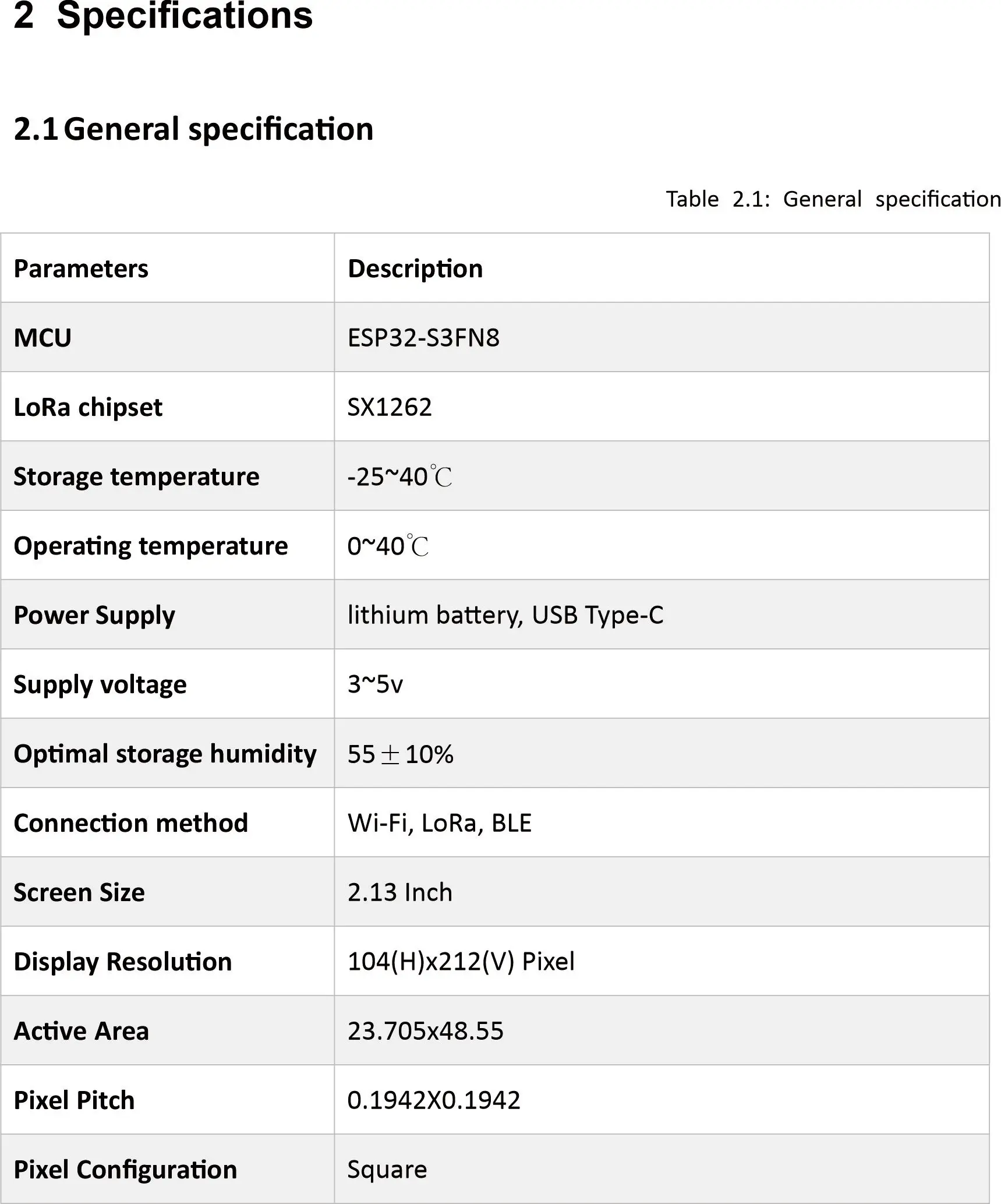
SPECIFICATIONS
Accessory Type: USB To DC Cable
Battery Included: No
Brand Name: Heltec Automation
Compatible With: ESP32
Connection Method: Wi-Fi, LoRa,BLE
Display Resolution: 122(H)x250(V) Pixel
Frequency: 470~510MHz, 863~928MHz
High-concerned chemical: None
LoRa Chipset: SX1262
MCU: ESP32-S3FN8
Origin: Mainland China
Power Supply: lithium battery, USB Type-C
Screen Size: 2.13 Inch
Supply Voltage: 3~5v
Typical Application Fields: Internet of Things (IoT)
Add an Accessories, Click on the image below to view more products
Product redesign
Product real-life photos
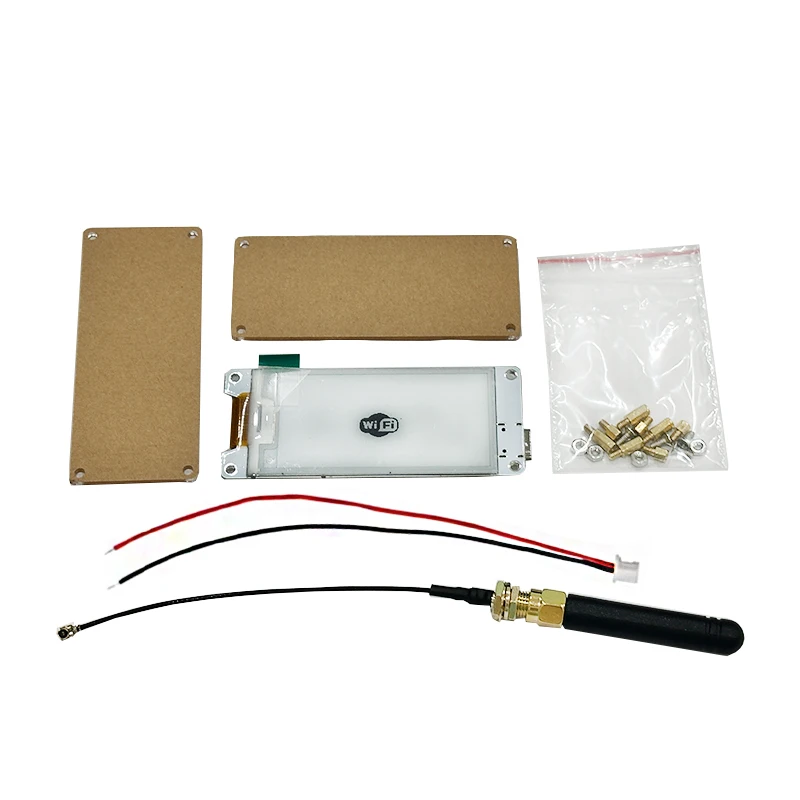
Wireless Paper is an E-Ink development kit with multiple wireless drive methods. Collaborate with the sample programs and development tools we provide, users can operate the display via Bluetooth, Wi-Fi and LoRa.
This board is equipped with a default 2.13-inch black and white E-Ink display screen, continuous display for 180 days after power outage. It can be used to develop applications such as electronic tags and identity tags.
Wireless Paper is a part of the “Heltec LoRa“ series, with the following features:
ESP32-S3FN8 + SX1262 Chipset, device can be driven via Wi-Fi, BLE and LoRa;
Default 212 x 104 pixels black-white display, it can also be used to drive E-Ink screens of other sizes;
High contrast, high reflectance, ultra-wide viewing angle;
Low power consumption, 20uA in deep sleep;
Internal integrated display screen refresh page function, users can drag and drop BMP images to achieve refresh;
Commercial temperature range: -25 ~ 40℃;
Onboard USB-UART bridge, facilitate user secondary development.